Health and Safety Policy — Commercial Waste Removal Newham
 This Health and Safety policy sets out the approach of our commercial waste removal team to managing risks associated with business refuse, skip and bin services across our rubbish company service area. It applies to all staff, contractors and visitors involved in the collection, transport and disposal of commercial waste. The goal is to protect people, property and the environment through clear responsibilities, practical controls and regular review. Safety is central to our operations and is embedded into everyday tasks.
Our commitment includes the prevention of work-related injury and ill health, the minimisation of environmental impacts, and the promotion of safe behaviour. This policy complements health and safety arrangements adopted by our partners and clients while remaining focused on the specific risks that arise during commercial rubbish removal and recycling activities. All personnel must familiarise themselves with the procedures and cooperate fully in their implementation.
 The scope covers refuse collection from commercial premises, temporary storage, loading and movement of waste, transport to transfer stations, and activities at customer sites. Key responsibilities are allocated as follows:
- Management: developing systems, providing training and equipment, and conducting risk assessments.
- Supervisors: ensuring correct procedures are followed on site and during vehicle operations.
- Employees and Contractors: following safe systems of work, reporting hazards and using provided PPE.
Risk assessment is the foundation of our approach. We carry out documented assessments for every type of job within our commercial waste services, from one-off clearances to scheduled collections. Assessments identify manual handling hazards, vehicle interactions, slips and trips, confined spaces, contact with hazardous substances, and the risks of sharps or contaminated materials. Control measures are implemented following the hierarchy of control and are kept under review as site conditions change.
Control Measures and Safe Systems
Controls include route planning to reduce vehicle movements, segregation of waste streams to avoid cross-contamination, safe lifting techniques, use of mechanical handling aids, and the safe locking and loading of bins and containers. We maintain regular vehicle inspections and ensure all crew are trained in loading limits, securing loads and operating hydraulic equipment safely. Emphasis is placed on communication and the use of high-visibility clothing around moving vehicles.
 Training, competency and personal protective equipment (PPE) are vital. All operatives receive induction training specific to commercial waste removal, refresher courses, and task-based instruction. PPE such as gloves, eye protection, protective footwear and high-visibility garments is provided and its use is mandatory where risks dictate. Training records and competency checks are retained to demonstrate compliance and inform further development.
Monitoring and reporting form a continuous cycle of improvement. Routine site inspections, vehicle checks and operational observations are conducted to verify that safe systems are followed. Incidents, near misses and any unsafe conditions must be reported immediately through our internal reporting process so that corrective actions can be taken. Investigation of incidents aims to identify root causes and prevent recurrence by updating procedures and training.
Emergency Preparedness
Emergency arrangements include spill response for liquids, first aid provisions, fire procedures for vehicles and temporary storage areas, and access to emergency services. Crews are briefed on emergency contacts and site escape routes before commencing potentially hazardous tasks. Regular drills and scenario-based exercises help maintain readiness and ensure effective response.Operational safety extends to vehicle and plant management. Vehicles used for commercial waste services are subject to routine maintenance, daily operator checks and appropriate licensing. Load security, reversing safety and safe use of lifting equipment are enforced. Drivers and crew follow designated drop-off protocols at waste transfer facilities to reduce exposure to site hazards and to maintain smooth logistics.
Handling of hazardous or controlled wastes is managed through segregation, labelling and secure containment. When such materials are encountered during commercial rubbish collection, crews are trained to isolate the load and notify supervisors. Waste that may present a chemical, biological or sharps risk is dealt with using specialist contractors where required. Records are kept to ensure traceability and to support safe disposal or treatment routes.
Contractor management ensures that any subcontracted teams operate to the same safety standards expected of in-house staff. Pre-qualification, induction, documented methods and supervision are used to control the work of third-party providers. Regular audits and performance reviews verify adherence to the policy and to the operational procedures for waste collection Newham teams and their equivalents in adjacent service areas. Consistent standards reduce variability and improve safety outcomes.
 Environmental protection and sustainable practice are integral to our policy. We promote recycling, reuse and recovery where possible, and seek to reduce contamination of recyclables during collection. Staff are trained in segregation techniques and encouraged to minimise accidental littering or spillage during operations. Records of waste streams and volumes support environmental monitoring and continuous improvement.
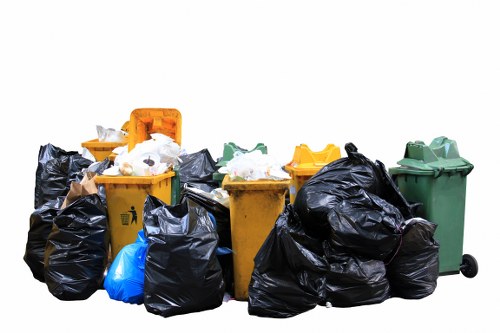 Record keeping, review and management oversight ensure the policy remains effective. Operational records, training logs, incident reports and audit findings are retained and used to measure performance against safety objectives. Management reviews are held periodically to assess policy performance and to drive improvements in our commercial waste removal practice and rubbish collection services across the service area.
The policy is communicated to all employees, contractors and relevant stakeholders. It is supported by written procedures, toolbox talks, site briefings and visible leadership. Everyone is responsible for contributing to a safe workplace by identifying hazards, following procedures and acting to prevent harm.
This policy will be reviewed annually or more frequently if operational changes, incidents or regulatory developments indicate the need for revision. By maintaining robust controls, competent personnel and a culture of safety we aim to deliver reliable, safe and sustainable commercial waste removal services across our operational area.
